Restoring the pawpaw (Asimina triloba) to the Northern Illinois landscape, one planting day at a time.
A DeKalb County 501(c)(3) founded in 2025, organized exclusively for charitable and educational purposes.
Plant the trees. Share the knowledge. Restore the habitat.
The Pawpaw Foundation plants pawpaw trees and teaches Northern Illinois communities about their ecological, cultural, and nutritional value.
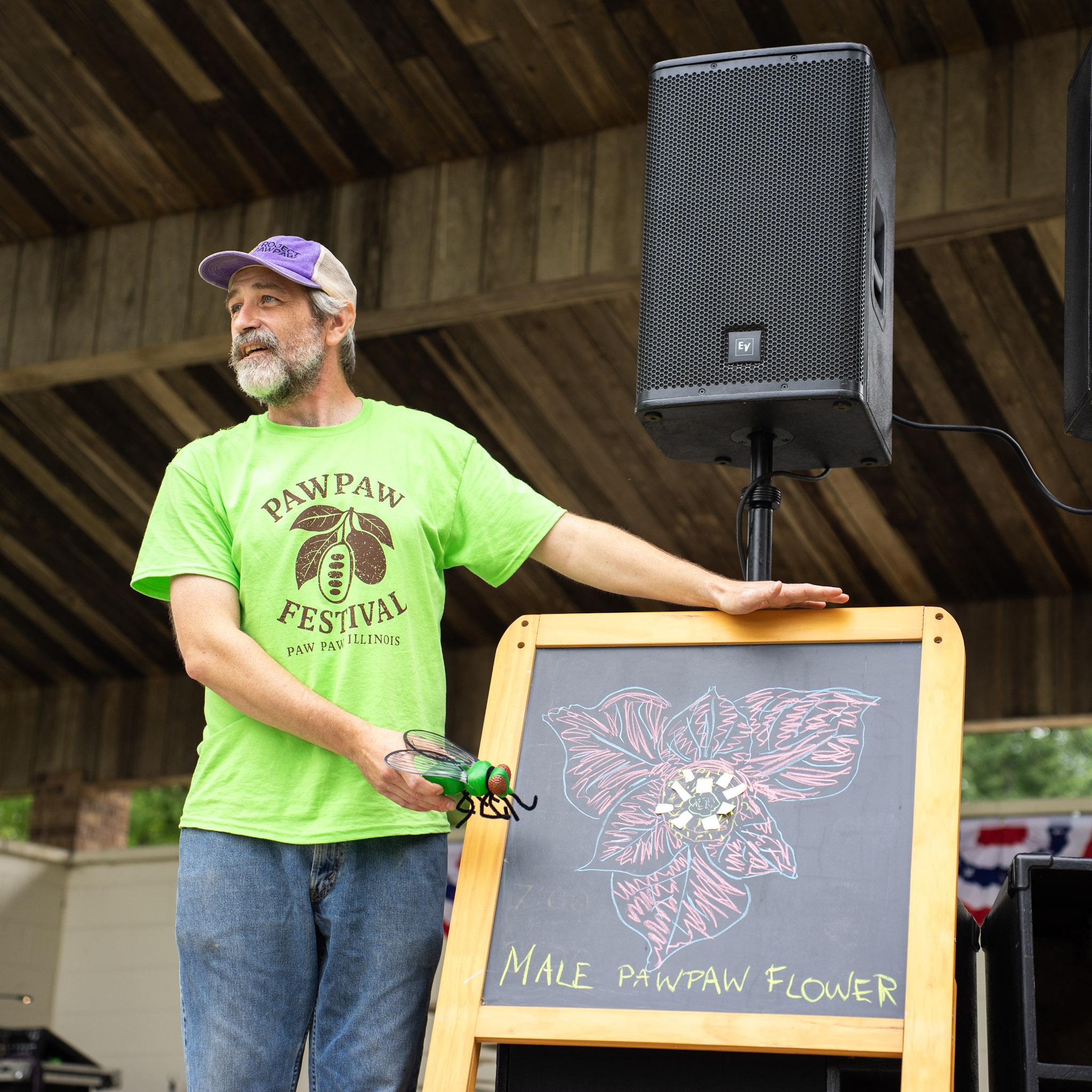
We do that through hands-on planting and programs with schools, parks, churches, prairie restorations, and local organizations: putting young pawpaws in the ground, getting their leaves into the hands of fourth graders, and running the education tent at the Pawpaw Festival in Paw Paw, Illinois with NIU, where neighbors can finally taste the fruit their grandparents may have known but most of us have never met.
From Article I, §2 of our bylaws
The Pawpaw Foundation grew out of a shared conviction that the pawpaw, America's largest native fruit1 and a tree that once grew across the woodlands of Northern Illinois,2 deserves a place in our communities, our diets, and our ecological future.
We started in 2025 in DeKalb County, where the grove meets the prairie. From there we work outward: planting groves with schools, parks, churches, and prairie restorations; running classroom programs that put pawpaw leaves into the hands of fourth graders; and, every fall, running the education tent at the Pawpaw Festival in Paw Paw, Illinois alongside NIU, where anyone in the region can finally find out what the fruit tastes like.
Every tree we plant is a long bet. Pawpaws don't fruit for five to seven years.3 We're betting that the people who plant them with us in 2026 will be the ones harvesting alongside their neighbors in 2032, and that Northern Illinois will be a little richer for it.
Austin Cliffe
Austin runs the day-to-day work of the Pawpaw Foundation: stewarding existing plantings, building partnerships with schools, parks, and prairie restorations across Northern Illinois, and leading volunteer work days.
He's been growing pawpaws in DeKalb since 2014, grafting cultivars from Tollgate Gardens onto rootstock sourced from Paw Paw, Illinois, a village whose name betrays the region's lost relationship with the fruit. In 2022 he won the Ohio Pawpaw Festival with one of his own Tollgate-grafted trees. In 2024 he cofounded the Pawpaw Festival in Paw Paw, Illinois, and planted pawpaw seeds at the J.F. Glidden Homestead. In April 2026 he received the City of DeKalb's STARR Award for Individual Sustainability Champion.
- Dr. Matthew DeitchPresidentDirector of the Northern Illinois Center for Community Sustainability at NIU. Environmental planner whose research focuses on water resources, stormwater, and climate adaptation.
- Jerry FosterTreasurerSmall Town Champion at Resource Bank, leading InspireRenewEnjoy, a small-town revitalization initiative that equips rural leaders with stories, tools, and grant resources to bring their communities back to life.
- Shawn BeckSecretarySolutions architect and AI integrations engineer. Founder of clairecalls.com and cofounder of the Pawpaw Festival in Paw Paw, Illinois.
- Dr. Melani DuffrinDirector of EducationProfessor of Health Sciences and Nutrition at NIU. Founder of FoodMASTER, a program that uses food to teach K–12 math and science, honored by the White House in 2024. Past board member of the Ohio Pawpaw Festival.
- Al RoloffDirectorRetired Natural Resources Manager for the DeKalb County Forest Preserve District, where he helped plant and maintain many of the county's native prairies, wetlands, and woodlands over decades of restoration work.
Saturday, May 2 at NIU North 40. Come spend the morning with us.
3 sources
- Largest edible fruit native to North America; botany, taste, and cultivation history: Kentucky State University Pawpaw Program, “The Pawpaw (Asimina triloba).” KSU runs the world’s only full-time pawpaw research program and hosts the USDA National Clonal Germplasm Repository for the species. ↩
- Native range (Gulf Coast to the Great Lakes and southern Ontario) and USDA hardiness zones 5–9: USDA NRCS PLANTS Database, Asimina triloba profile, and the KSU Pawpaw Planting Guide. ↩
- Time to first fruit and the broader history of pawpaw cultivation: KSU Pawpaw Planting Guide; and Andrew Moore, Pawpaw: In Search of America’s Forgotten Fruit (Chelsea Green, 2015). ↩